Oct 24, 2026Buying Guides
Rubber Gym Flooring: Rolls or Tiles? What a Commercial Gym Owner Should Know
Rubber gym flooring rolls and interlocking tiles compared zone by zone: cardio, free weights, machines. Thickness and SBR vs EPDM explained, plus what affects price.
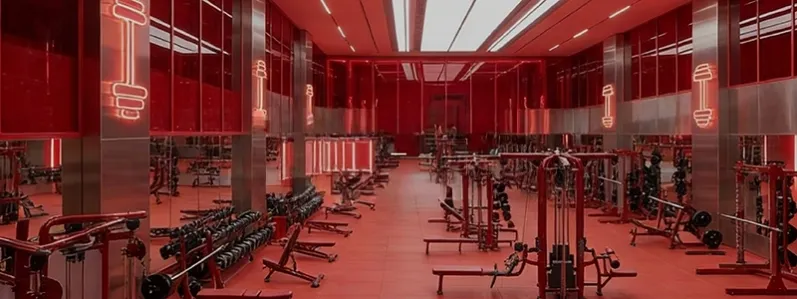
Every commercial gym floor takes a beating. Dumbbells get dropped, plates get dragged, sweat and disinfectant get applied daily. The surface underneath all of that has to absorb impact, stay grippy when wet, and still look acceptable at close of business.
Rubber flooring is the default answer. But "rubber flooring" splits into two very different formats — rolls and interlocking tiles — and the choice shapes your install cost, your maintenance, and how each training zone performs. Here is the honest version of the comparison, written for whoever is actually doing the buying.
The 10-second answer
Choose rubber rolls for large, open areas where you want fewer seams — cardio zones, studios, walkways, machine areas. Choose interlocking tiles for free-weight zones, functional training areas, and anywhere you may need to replace a damaged section or reconfigure the layout later. Most commercial gyms end up using both.
Rolls vs tiles: the real differences
Factor | Rubber Rolls | Interlocking Tiles |
|---|---|---|
Installation | Full glue-down; flat, dry, clean base required | Floating, no adhesive |
Seams | Long, continuous, minimal | A grid of seams |
Subfloor tolerance | Low — bumps telegraph through | Higher — accepts minor unevenness |
Liquid resistance | Seam-free, very good | Seams can trap spills if left |
Damage repair | Cut out and re-glue a section | Swap one tile |
Reconfigurability | No | Yes — lift and move |
Best zones | Cardio, group fitness, corridors | Free weights, functional zones, rented spaces |
Typical thickness | 3–12 mm (up to 18 mm heavy-duty) | 8–25 mm by product and zone |
Neither format is universally better. A roll gives you a continuous, professional surface for large areas; a tile gives you repairability and flexibility. The right choice depends on the room, the equipment, and how permanent the installation is.
Zone by zone: what goes where
Cardio area (treadmills, ellipticals, rowers)
Rolls, typically 3–6 mm. The machines sit level without tile seams, the surface cleans easily, and sweat does not attack the joints. Our all-black rubber rolls run 1–1.25 m wide and 5–30 m long in 3–12 mm thicknesses — or the color-dot rolls (B-08/B-10/B-11) if you want a lighter, branded look.
Free-weight / heavy equipment zone
Interlocking tiles or compression-molded mats, 8–20 mm depending on drop height. Thickness here is your protection — a dropped plate hits the tile, not the slab. Tiles are repairable: a damaged unit is lifted out and replaced in minutes. The products to ask for are EPDM interlocking mats (for example 1000×1000 mm at 15–30 mm), compression-molded rubber mats (500×500 / 1000×1000 mm), or composite tiles with a dense top layer and a shock-absorbing base. If you want to see how the same thinking applies to a sports court rather than a gym, our basketball court buyer's guide covers thickness, rebound and standards in detail. Read the basketball court guide →
Fixed equipment zone (machines, rigs, plate-loaded stations)
Rolls or tiles at 5–8 mm. This zone sees heavy static load rather than drops, so you need compression resistance and grip underfoot — not maximum shock absorption. Right-angle-edge mats sit flush around machine footprints and look finished.
Group studio / stretching / yoga
Thin rolls (3–5 mm) or purpose-built mats. Comfort and cleanability matter more than armor here. Cork-faced rubber tiles (500×500×25 mm) give a warm, non-slip surface that reads as premium to members.
Thickness: what the numbers mean
Thickness is the variable where supplier quotes diverge most, because a thin floor and a thick floor photograph identically.
Zone | Typical Thickness |
|---|---|
Cardio, corridors, studio | 3–5 mm |
Machines, functional zone | 5–8 mm |
Light free-weight drops | 8–12 mm |
Heavy drops (powerlifting, olympic lifting) | 15–30 mm |
Two things worth knowing. First, the shock value of a rubber floor comes from total system thickness plus density — a soft 8 mm foam-like tile is not a substitute for a dense 15 mm tile under a barbell. Second, outdoor or humid sites need thicker, UV-stabilized compounds; thin rolls degrade faster under sunlight and moisture.
Always confirm the thickness and density in writing before comparing quotes. "Rubber flooring at $X per square meter" is not a specification.
SBR vs EPDM: the material question that affects your price
Most rubber gym flooring is made from recycled SBR granules, with EPDM added in the visible surface layer for color.
SBR (styrene-butadiene rubber) is the bulk of most products. It delivers compression resistance and durability at a sensible price, and recycled SBR is standard across the industry — this is also where most of the environmental story comes from, since it is recycled tire rubber.
EPDM (ethylene-propylene-diene) is what makes color products hold their color. EPDM resists UV and weathering far better than SBR, and the percentage in the surface layer is a direct driver of both color durability and price. The difference between a floor with 10% EPDM color dots and one with a 50% EPDM surface is real — outdoors, the 10% floor will look older after two years.
The question to ask: "How much EPDM is in the surface layer, and what does the fade warranty cover?"
Odor: the issue nobody mentions until complaints start
Recycled rubber can carry a smell. In a warehouse it is a non-issue. In an air-conditioned studio it becomes a member complaint within the first month. High-quality compounds and low-odor constructions exist — our odorless elastic interlocking tile, for example — and for enclosed spaces, ask the supplier to confirm the odor profile and provide documentation rather than a verbal assurance.
Colors, logos, and branding
- Color-dot rolls (black SBR base with 10–50% EPDM color dots) give cardio areas a clean, branded look.
- Mixed-color and flecked EPDM rolls suit premium showrooms and club-branded facilities.
- Logo and zone colors can be produced into the surface; confirm the color-matching process and MOQ implications up front.
- On most lines, any color can be customized — standard grays, blacks, and team-color blends cover most budgets.
Installation: what actually matters
Rolls need a flat, dry, clean base. Glue-down rubber telegraphs every bump and crack in the concrete. A moisture test is non-negotiable — trapped moisture lifts adhesive and creates bubbles.
Acclimate before installing. Rubber expands and contracts with temperature. Store the material in the room for 24 hours before laying, or the seams will gap.
Tiles are genuinely DIY-friendly. Interlocking tiles install with no glue and minimal tools; a gym floor can be laid in a day. This is why smaller gyms and rented studios choose them — and why suppliers like us send written installation guidance with every order. Whatever you pick, read our guide on what goes wrong when rubber gym flooring is installed badly — moisture, adhesive and acclimation are where most jobs fail. See the installation mistakes guide →
The edges are where sloppy installs fail. Use matching side strips, right-angle edge mats, and threshold ramps so equipment wheels and trolleys do not catch.
Fire and safety claims: read them carefully
Commercial buildings are governed by local fire codes, and some suppliers advertise fire ratings as a headline feature. Two things worth knowing.
First, rubber is a hydrocarbon material — its natural behavior under fire is not the same as inherently non-combustible products. Any fire-performance claim should come with a test report you can verify against the exact product, not a similar one. If a supplier will not share the document, that is information in itself.
Second, what your building actually requires is decided by your local authority and your project's fire engineering — not by a marketing page. Get the test documentation, hand it to your architect or code consultant, and let the local requirement decide.
10 questions to ask before ordering gym flooring
- What exact thickness and EPDM percentage does this price cover?
- Can I see the datasheet for this specific product — density and slip resistance?
- What is the odor profile, and is the product designed for enclosed air-conditioned spaces?
- Rolls: is the subfloor moisture test included? Tiles: what is the subfloor tolerance?
- What is the MOQ, and can I order a sample or trial area first?
- What is the production lead time, and are on-time delivery terms in writing?
- What does the warranty cover — seams, fading, surface wear?
- Do you supply matching side strips, edge mats, and transition profiles?
- Can you produce zone colors, logos, or branded patterns — and at what quantity?
- How do you pack for international shipping?
About PIN Rubber
PIN Rubber (Jiaxing Jinto New Materials Co., Ltd.) is a rubber flooring manufacturer and exporter based in Jiaxing, Zhejiang, China, supplying commercial and institutional projects in 50+ countries for over a decade. We run a standardized production network with an annual capacity of over 2 million square meters and a 5-level quality inspection system, with in-house R&D covering product design and custom color/logo work. Our gym project references include an indoor fitness club floor supplied to a client in Saudi Arabia. We work with low MOQs and short lead times, and we supply product documentation on request.
Planning a gym fit-out? Tell us your zone layout and expected traffic — we will recommend the format and thickness for each zone and quote direct from the factory. If you are still deciding between supplier quotes, our guide on rubber gym flooring thickness, material and supplier selection walks through what the pricing actually covers. Compare supplier quotes properly →
FAQ
Can I install rubber gym flooring over concrete?
Yes — concrete is the standard subfloor. Rolls need it flat, dry, and clean with a moisture test; interlocking tiles are more forgiving but still need a level surface without debris.
How thick should gym flooring be for heavy weights?
For powerlifting and olympic lifting, use dense rubber mats or interlocking tiles at 15–30 mm. Rolls at 8–12 mm handle moderate drops, but a heavy barbell drop is exactly the scenario where thickness protects both floor and equipment.
Is EPDM or SBR better for gym flooring?
Both perform under equipment; the difference is color and weather resistance. EPDM in the surface layer holds color under UV — the percentage (10–50%) trades price against color durability. For pure black floors, recycled SBR is the standard, cost-effective choice.
Will rubber gym flooring smell?
Some recycled-rubber products carry an initial odor that can linger in enclosed studios. Odorless and low-odor constructions exist — ask the supplier for the product's odor profile and documentation if the space is air-conditioned.
How long does rubber gym flooring last?
Correctly specified and maintained, rubber gym floors commonly serve 10–15 years. Heavy-use zones such as free weights may show surface wear earlier — which is one more reason to put repairable tiles there.