Oct 23, 2026Installation & Technical
Installing Rubber Gym Flooring: What Goes Wrong (And How to Get It Right)
Uneven subfloors, wrong adhesive, temperature gaps and missing acclimation — the five most common rubber flooring installation mistakes and how to prevent them.
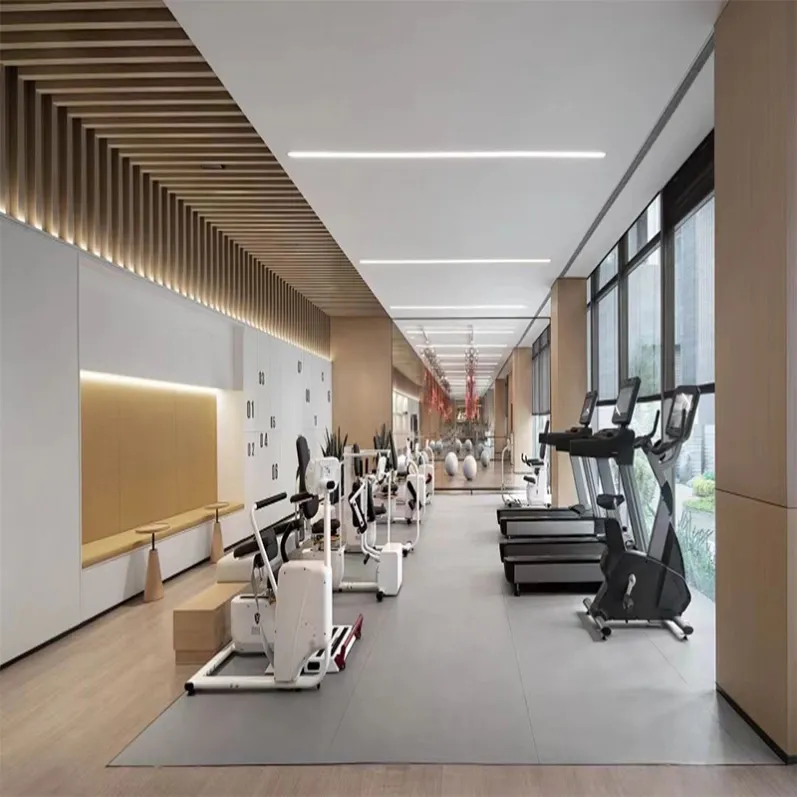
Last year, a gym owner in Saudi Arabia ordered 800 square meters of rubber flooring from us. When the shipment arrived, his contractor had never installed interlocking rubber tiles before. By the time he called us, he'd glued down 200 square meters on an uneven subfloor — and the tiles were lifting at the seams.
We walked him through the fix. But it cost him two weeks and a re-order of adhesive that he hadn't budgeted for.
The flooring itself was fine. The installation was the problem. And it's a problem we see repeatedly — not because installers are bad at their job, but because rubber flooring has specific requirements that generic flooring contractors don't always know.
So here's what goes wrong, and how to prevent it.
Problem 1: Uneven Subfloors
Rubber flooring — especially interlocking tiles — will telegraph every bump and dip in the subfloor. A 3mm gap under a 500×500mm tile becomes a visible hump on the surface.
The fix: level the subfloor before installation. For concrete, use a self-leveling compound. For existing floors, grind down high spots. It adds a day to the project. Skip it, and you'll see every imperfection through the rubber for the life of the floor.
Problem 2: Wrong Adhesive (or No Adhesive)
There are two approaches to installing rubber gym flooring:
Interlocking tiles (like our Puzzle series at 500×500mm or 1000×1000mm) don't need adhesive for most applications. The tiles lock together and the weight of the flooring holds them in place. This is the easiest option for first-time installers — and it's removable if you need to replace a section later.
Glue-down installation (for rolls and large-format tiles) requires a polyurethane adhesive rated for rubber. Not carpet adhesive. Not construction adhesive. Rubber-specific PU adhesive.
We've seen contractors use the wrong adhesive and end up with bubbles, lifting edges and tiles that shift under equipment. If you're gluing down rolls like our All Black Rubber Flooring series, ask your supplier for the adhesive spec.
Problem 3: Temperature Gaps
Rubber expands and contracts with temperature. Install tiles tight together in a cold warehouse, then heat the space to 25°C — and the flooring will buckle.
Leave a 5–10mm expansion gap around the perimeter of the room. Cover it with edge strips or ramp edging (we supply side strips in matching material for exactly this purpose). In outdoor or semi-outdoor applications, this gap needs to be larger.
We supplied flooring to a middle school running track in Fujian province where the summer surface temperature hits 50°C+. Without proper expansion gaps, the track surface would warp within one summer.
Problem 4: Ordering the Wrong Thickness for the Zone
A gym floor isn't one floor. It's zones — cardio, free weights, functional training, stretching. Each zone has different impact requirements.
We supplied a gym project in the US with two thicknesses: 15mm composite interlocking tiles for the general floor and 30mm high-density protection mats for the deadlift platform. Same color scheme, different specs. The contractor installed them as one continuous floor with a transition strip between zones.
That's how it should work. Order one thickness for the entire gym, and you're either overpaying for the cardio zone or under-specifying the lifting area.
Problem 5: No Acclimation Period
Rubber flooring needs 24–48 hours in the installation environment before laying. Tiles shipped from a cold warehouse and installed immediately in a heated gym will contract as they warm up, leaving gaps at the seams.
Stack the tiles in the room, open the packaging, wait two days. It's the simplest step and the most commonly skipped one.
What We've Learned
We've supplied rubber flooring to projects across four countries — indoor gyms in Saudi Arabia, shooting ranges in the UK and the US, school running tracks in China. Every project teaches us something about how our products perform in real conditions.
If you're planning a rubber flooring project and you're not sure about the installation approach, send us the floor plan and the intended use. We'll tell you what specification to order and what to watch for during installation. No charge — it's how we build relationships that last longer than one shipment.